











IN SUMMARY
Cyber insurance is no longer optional for Australian SMEs. It’s part of being sufficiently insured.
Small to Medium businesses (SMEs) are now among the most targeted by cybercrime in Australia. And most cybersecurity incidents don’t start with some sort of overly sophisticated hack. They actually start with something simple, like a staff member clicking the wrong email. From there, systems get locked, operations stop and revenue stops, sometimes for days. That’s devastating for businesses!
That’s when you need cyber insurance for SMEs in Australia. Sure, it doesn’t prevent attacks. But when something does go wrong, cyber insurance is what can keep your business running while you deal with the fallout.
This article breaks down what Australian SMEs need to know about cyber risk, including:
- why small businesses are prime cyber security targets, not exempt ones
- how most cyber incidents start (and it’s not what you’d expect)
- what Australian business cyber insurance does and doesn’t cover
- how to find the right level of protection for your business
If your business uses email, Wi-Fi, online payments or stores customer data, you have cyber exposure. The real question is whether you have the right insurance cover to protect you.

One of the most common things we hear at GIBA from business owners is: “We’re too small to be targeted by cyber security attacks”.
And I get it. When you see huge companies like Optus or Medibank in the news as victims of cyber attacks, it’s easy to assume cybercrime is a big business problem.
“Why would cyber hacks bother targeting us? We’re too small.”
But the reality is the opposite.
Cyber incidents are rising across Australia, and cyber insurance for SMEs is becoming increasingly important for businesses of all sizes.
In the 2024–25 financial year, the Australian Cyber Security Centre received over 84,700 cybercrime reports. That’s one report every 6 minutes!
At the same time, the average cost of cybercrime for small businesses has risen to around $56,600 per incident, with costs continuing to increase year-on-year.
That’s not just large organisations; that’s everyday business. Just like yours.
And I’ll say this clearly: if you don’t have cyber insurance, you’re not fully insured. You’re at risk. Let me explain why.

Why Australian SMEs are prime cyber security targets (not exempt)
There’s a common assumption that hackers go after big corporations.
But in reality, small to medium businesses in Australia are often the easiest win as a cybercrime target.
Why?
Because attackers know:
- where the gaps usually are
- that staff aren’t always trained
- and how much they can realistically extort
Your smaller business is what cyber hackers would call “low-hanging fruit”. And it’s not usually a sophisticated, Hollywood-style hack.
Most of the time, it starts with something simple:
- A staff member receives an email.
- It looks legitimate.
- They click a link, download a file or follow its instructions in confusion.
And BOOM. That’s it. Your system is compromised for everyone.
From there, attackers can observe, learn your operations and decide the best way to strike, often through ransomware or fraud.

The biggest business risk to cyber security? Simple human error
One of the most important things I explain to clients is this:
Cyber incidents are rarely just about technology failing.
They’re about people making honest mistakes.
- Clicking the wrong link.
- Opening the wrong attachment.
- Trusting an email that looks “close enough”.
There’s also a more targeted version called spear phishing, where attackers mimic real contacts or internal communication styles. They study how your business communicates, then replicate it.
So, it doesn’t feel suspicious. It feels normal. And people fall for it easily every day.
That’s why most cyber incidents don’t start with a hack. They start with a click.
For more, read: How scammers are draining bank accounts

If your Australian business does these things, you’re at risk of a cyber attack
So, you might be asking yourself: “Do I really need cyber insurance for small businesses in Australia?”
My answer is simple. If your business uses:
- the internet
- a website
- online payment systems or POS terminals
- Wi-Fi networks
- cloud-based tools or shared files
- any form of customer data
…then yes, you’re exposed to potential cyber security risk.
And to put that into perspective, some of the most common cyber incidents reported by businesses in Australia aren’t complex attacks.
They’re things like:
- email compromise (19%)
- business email fraud involving financial loss (15%)
- identity fraud (11%)
These are literally everyday scenarios that most businesses deal with in some form. It doesn’t matter if you’re a café, a barber, a marketing agency, a tradie or a retailer.
If you operate in today’s business world, you’re part of the digital landscape.
And if you’re part of that landscape, you’re part of the risk.

The real cost of a business cyber attack? It’s the downtime
When an Australian small business cyber attack happens, the biggest issue isn’t always the digital breach itself.
It’s what happens after.
- Your systems can get locked.
- You lose access to files.
- Your team can’t work.
- Your customers can’t interact with you.
- Your reputation gets damaged.
- Your operations stop.
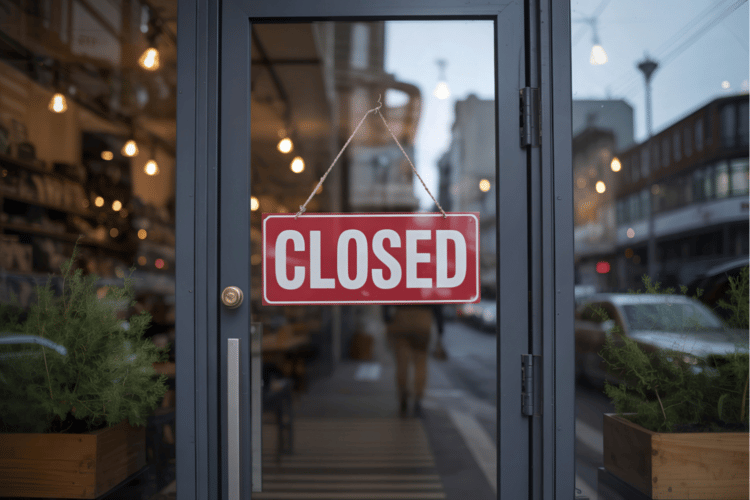
And when your business stops, your revenue grinds to a halt.
Suddenly, you’re paying to fix the cyber problem and you have no business continuity. As your expert Australian insurance brokers, we’ve seen situations where businesses are down for days or even weeks, trying to understand what’s happened and get back online. Without insurance, most don’t survive that – sadly.
Every minute your business isn’t running, you’re losing money.
That’s the real (and horrible) impact.

Cybercriminals are getting smarter every single day
Something else business owners don’t realise is how these digital attacks are evolving.
Cybercriminals don’t operate randomly anymore. Many work like structured
profitable businesses, constantly refining how they target companies!
Yes, cyber crime is now a business. Illegal, but it’s not a hobby. Many globally do this for a living.
With the rise of AI, they’re also becoming faster and more convincing. Even if you’ve got protections in places like Multi Factor Authentication (MFA) or security systems, they’re constantly adapting.
That’s why relying on cyber security prevention alone isn’t enough.
What cyber insurance does (and doesn’t do)
This is where a lot of confusion comes in.
Cyber insurance doesn’t stop the attack from happening. That’s what your IT systems, protections and cyber security training are for.
What it actually does is step in when something goes wrong.
Cyber insurance helps protect your business financially
and operationally while you deal with the incident.
Depending on the cyber insurance policy, this can include:
- business interruption
- liability
- legal protections
Actually, all Australian cyber insurers also have incident response teams or IT support built in, who step in to help assess and contain the situation.
But it’s important to understand: Cyber insurance doesn’t reverse the damage.
It aims to provide some financial compensation and assistance to support your business while addressing the problem.

What happens when a cyber incident does happen and you have the right cyber insurance
If a cyber incident occurs and you have cyber security insurance, timing is critical. In many cases, the process looks like this:
- Call the cyber hotline of your chosen insurer.
- Talk to the response expert and explain the situation clearly.
- Their cyber specialists or IT support teams will step in to assess and contain the issue.
- Your insurer will conduct an assessment of the potential business interruption
- They’ll then discuss the next steps with you.
After the digital security incident is addressed, there’s usually a review process to understand what happened and strengthen future protections. Remember that the level of support depends on the cyber security policy you have.

Not all Australian cyber insurance is the same
Right now, there are a lot of insurers offering cyber cover in Australia.
But not all cyber security policies are built the same.
- Some include incident response teams.
- Some don’t.
- Some provide broader support.
- Others are more limited.
Some businesses also rely on basic cyber liability insurance add-ons, but these often aren’t comprehensive enough for larger incidents or extended downtime.
At GIBA, we generally find that a standalone cyber policy provides the strongest level of protection.
Because when something goes wrong, you want to
know you’re fully covered, not just partially.

How to find the right cyber insurance for your business
This isn’t about just selling any cyber policy.
As your trusted insurance brokers in Australia, we sit down with you to ask questions and understand your business.
- We look at how you operate.
- Where your exposure is.
- What risks are relevant to your business.
If needed, we’ll work alongside your IT provider to help complete cyber proposal forms and make sure everything is clearly understood.
From there, we compare policies across our network and guide you on what makes the most sense for your situation. Because every business is different and cyber risk isn’t one-size-fits-all.

Common cyber insurance questions SMEs ask
Do I need cyber security insurance as a small business in Australia?
Yes. If your business uses email, Wi-Fi, online payments, cloud-based tools, POS systems or stores customer information, you have cyber risk exposure. At GIBA, we help Australian small businesses understand where that exposure sits and whether their current insurance is enough to protect them after a cyber incident.
Why does GIBA recommend cyber insurance for SMEs if most incidents start with staff error?
Because human error is one of the biggest cyber risks for Australian SMEs. A staff member clicking a phishing link, opening a suspicious attachment or trusting a fraudulent email can quickly lead to business interruption, financial loss or system downtime. GIBA recommends combining practical staff awareness with the right cyber insurance policy so your business has support if an incident occurs.
What type of cyber insurance should my business take out?
In most cases, a standalone cyber policy provides broader and more complete protection than basic add-on cover. At GIBA, we assess your business, review your cyber exposure and help match you with the right level of cyber insurance cover for your operations, systems and risk profile.
Why does GIBA often recommend standalone cyber insurance for SMEs?
GIBA generally finds that standalone cyber insurance gives Australian SMEs broader protection than basic cyber add-ons. A standalone policy may include stronger support for business interruption, incident response, cyber extortion, data recovery and financial loss, depending on the insurer and policy wording. GIBA reviews your business, your systems and your exposure to help find cover that suits your risk profile.

Ready to check where your business stands? Let’s talk
Most businesses insure their physical assets without thinking twice.
But when it comes to digital risk, it’s often overlooked. The reality is, cyber incidents are happening more often and small businesses across Australia are not immune.
In many cases, Australian SMBs are the target.
And the key thing to remember is this: Cybercriminals don’t wait until you’re ready.
If you’re confused about cyber insurance or you’re not sure if your current insurance adequately protects your business, now’s the time to ask us.
At GIBA, we help businesses across Australia understand their cyber exposure and find the right level of protection through tailored business cyber insurance solutions.
Whether you’re a café, agency, retailer, tradie or growing SME, we’ll help you understand your cyber risk and what practical protection looks like for your business.
Ready to take the next step?
Get in touch with the GIBA team for a simple, no-pressure conversation about your cyber insurance options.
Thanks for reading.
Damian Frei
Account Executive/New Business Manager at General Insurance Brokers of Australia (GIBA)